

Southeast Asia and the Pacific
About
Southeast Asia and the Pacific (SEA) is a dynamic region that hosts extremely rich but vulnerable landscapes important for the maintenance of biodiversity and ecosystem services and are intertwined with agri-food systems. The Southeast Asian region is home to 61 million undernourished people, around 9% of its population, and more than 33 million are severely food insecure. Various challenges in the region irregular, more frequent, and intensified events such as droughts, floods, temperature extremes, pest and disease outbreaks, and sea-level rise, all of which are worsened by climate change. These issues are compounded by rapid urbanization and value chain disruption caused by the COVID-19 pandemic, which has significantly increased poverty and hunger in many countries, with rural areas and women disproportionately affected.
Leveraging its unified mission and strategy, CGIAR works with and supports national and regional partners to achieve sustainable and resilient food, land, and water systems in alignment with the ASEAN Vision and Strategic Plan for Cooperation in Food, Agriculture, and Forestry 2016-2025, the ASEAN Community Vision 2025, the ASEAN Comprehensive Recovery Framework, and the United Nations Sustainable Development Goals. With a long history of partnership in the region, CGIAR offers a holistic and demand-driven research agenda that addresses realities on the ground and embraces bottom-up and locally customized solutions.
Challenges and Opportunities
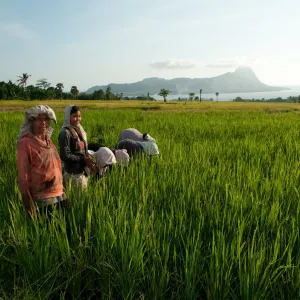
- The SEA region is heavily dependent on rice, and solutions need to be developed that address food, nutrition, safety, and environmental challenges.
- Promotion of diversified crop systems can allow farmers to benefit from new products as well as build a foundation of economic resilience and environmental sustainability.
- Research and programs that take place from the plant and plot to landscape scale, with integrated research can be designed to address the interconnectedness of problems.
- Food systems transformation offers tremendous opportunities to address responsible use of natural resources, protect biodiversity, improve the nutritional status of people through healthy and affordable foods, and include marginalized groups as agents and beneficiaries of positive change.
Research and Action
- Germplasm exchange and evaluation network for food crops for regional safety: Accelerate selection and release of climate-smart varieties at the country level.
- Cooperation through institutions: Collaborate and coordinate among communities within and across scales, strengthening existing institutions, building new ones to address gaps, and improving connectivity between scales.
- Nourishing ASEAN megacities: Collaborate between public and private partners to ensure healthy and safe foods for urban people, produce healthy foods in the cities with limited land, and increase focus on rural-urban linkages for better food systems coordination and governance across value chains.
- Youth entrepreneurship and technology: Promote youth entrepreneurship for sustainable agri-food systems through a youth innovation platform, supported by innovative financing models and bridging engagement through startups and youth agripreneurs.
- Recovery, resilience and transformation: With ASEAN, focus on policy, market integration and trade, climate-smart agriculture and establishing decision-support mechanisms on agricultural, climate change, and food security policies and institutions for climate-resilient food systems.
Partners
CGIAR and ASEAN can build stronger cooperation based on the need to address various challenges outlined earlier and build a much more resilient agri-food system, thereby enabling the region to emerge strongly from COVID-19 and other existing challenges through a well-designed recovery plan that transforms agri-food systems to be more sustainable and climate smart.
CGIAR aims to work with the ASEAN Secretariat and Member States to develop a multi-year research-for-development program to support ASEAN’s Vision and Strategic Plan for Cooperation in Food, Agriculture and Forestry (2016-2025), especially focused around the three strategic themes of recovery, resilience and transformation. This research program will contribute to the vision of ASEAN to create a competitive, inclusive, resilient and sustainable Food, Agriculture, and Forestry (FAF) sector integrated with the global economy, based on a single market and production base contributing to food and nutrition security and prosperity in the ASEAN Community.
News
-

Kenya’s frontier in nature-based solutions monitoring and evaluation
From February 24th to 26th, the Ministry of Agriculture and Livestock Development in Kenya, in collaboration with the Alliance of Bioversity...
-

Kisumu County and the Alliance join forces to advance resilient food systems and multi-functional landscapes
The Alliance of Bioversity International and CIAT and the County Government of Kisumu have formalized a strategic partnership to advance...
-

Precision Nutrient Management: A Breakthrough for Rice Farming in Vietnam
Agricultural authorities and international research organizations (including IRRI and CIP) convened a specialized workshop in Can Tho City to assess...
-

Agroecology needs services, not just science, to scale
A new CGIAR-supported paper argues that agroecology can move beyond pilots when knowledge, finance, policy and service systems work together.
Publications
-
Progress Report Ethiopias Partnership for Accelerating Agricultural Solutions Scaling PAASS
-
SW Ethiopia land use management decision tool user manual
This tool supports land use planning and management decisions in Southwest Ethiopia. It allows you to explore key raster indices, generate...
-
Factors influencing Newcastle disease vaccine use in village chicken flocks in rural Burkina Faso
Background: Newcastle disease (ND) is endemic in traditional poultry farming in Burkina Faso. Despite government's efforts, international...
-
Impact of invasive weed Parthenium hysterophorus Asteraceae on mosquito abundance and plantfeeding behavior in an arboviral endemic region in Kenya
Background: Invasive alien species (IAS) are rapidly altering ecosystems, undermining biodiversity, ecosystem processes, and interspecies...